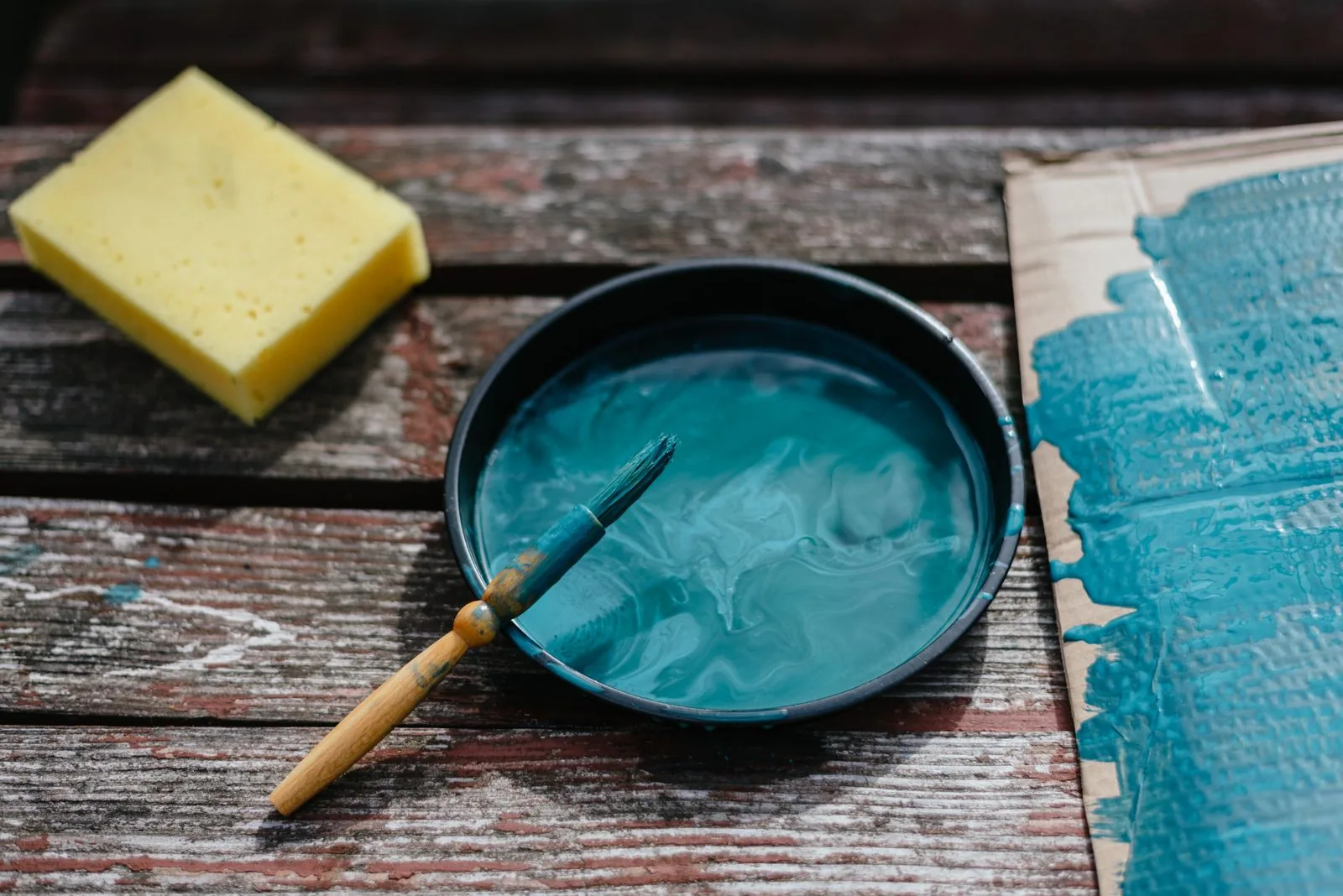
The best milk paint for most furniture is General Finishes Milk Paint, because it goes over previously finished wood without an additive and needs no topcoat. If you want the real thing (casein, lime and pigment you mix from powder) for raw wood or a chippy antique look, pick Old Fashioned Milk Paint. The catch: these two are not the same kind of paint, and choosing the wrong type is the most common reason a milk paint project peels or looks nothing like the photos.
We may earn a commission when you buy through links on this page, at no extra cost to you. As an Amazon Associate we earn from qualifying purchases.
Two products share one name
Traditional milk paint is a powder made from milk protein (casein), lime and pigment. You mix it with water, and it soaks into porous surfaces like bare wood. Old Fashioned Milk Paint, Miss Mustard Seed’s and Real Milk Paint all sell this type.
General Finishes and Rust-Oleum sell premixed liquids called milk paint that are acrylic. General Finishes says on its own Amazon listing that its product “is not a powdered, casein-based milk paint, but a premixed modern version.” Rust-Oleum’s technical data sheet lists the resin type as acrylic. They are named for the low-sheen, old-furniture look, not the ingredients.
That difference decides everything else: whether you need a bonding additive, whether you need to seal, whether the paint will chip, and how long you can keep leftovers.
How we chose
We compared manufacturer coverage figures, mixing and bonding instructions, technical data sheets and Amazon owner ratings for the milk paints sold on Amazon in the US. We did not test these paints ourselves. Coverage is normalized to one quart of mixed paint so the powders and liquids can be compared directly. Ratings are for the specific color listing we checked in October 2026; other colors of the same paint carry their own counts.
Comparison table
| Paint | Type | Coverage per quart (maker) | Over old finish | Topcoat | Amazon rating (listing checked) |
|---|---|---|---|---|---|
| General Finishes Milk Paint | Premixed acrylic | 100-125 sq ft | Yes, after cleaning and scuff-sanding | Self-sealing | 4.7/5, 674 ratings (Antique White quart) |
| Old Fashioned Milk Paint | Casein powder | About 72-75 sq ft | Needs Extra-Bond | Optional | 4.4/5, 524 ratings (Oyster White pint) |
| Miss Mustard Seed’s Milk Paint | Casein powder | 50-70 sq ft (whites), 70+ (darker colors) | Needs bonding agent | Wax, oil or topcoat to protect | 4.1/5, 171 ratings (Mora quart) |
| Rust-Oleum Milk Paint Finish | Premixed acrylic | 55-125 sq ft | Yes, no primer | Not required | Not shown in our check |
| Real Milk Paint (RMP Finishes) | Casein powder | Not published on the listing | Needs Ultra Bond | Wax, oil or topcoat recommended | 4.2/5, 24 ratings (Cocoa quart) |
1. General Finishes Milk Paint: best for most furniture
This is the one to buy if you are painting a dresser, side table or cabinet that already has a factory finish and you want a smooth, even color. General Finishes rates it for interior and exterior use, lists it as self-sealing, and gives coverage of 100-125 sq ft per quart and 400-500 sq ft per gallon. It brushes, rolls or sprays through an HVLP gun with a 1.8-2.0 mm tip.
Who it’s for: previously finished furniture and cabinets, beginners who want predictable coverage, and anyone who would rather not mix powder.
Who should skip it: anyone chasing a genuinely chippy, flaking antique finish. Acrylic paint grips too well to do that on its own.
- Pro: works over prepped existing finishes; GF’s prep is a 50/50 denatured alcohol and water clean, then a scuff with a 220-320 sanding pad.
- Pro: highest published coverage of the five, so one quart goes further.
- Pro: no topcoat needed, which removes a whole step.
- Pro: 4.7/5 from 674 Amazon ratings on the Antique White quart.
- Con: slow to harden. GF lists 2+ hours to recoat, 7-10 days to light use and 21 days to full cure.
- Con: the listing warns that clear topcoats over bright white can yellow, so whites are best left unsealed.
2. Old Fashioned Milk Paint: best true milk paint
Old Fashioned Milk Paint is the traditional casein, lime and earth-pigment recipe sold as powder. The maker says a pint bag holds 6 oz of powder and covers about 35-36 sq ft, a quart bag covers about 72-75 sq ft, and a gallon about 288-300 sq ft. You mix roughly equal parts powder and water, stir for 2-3 minutes and let it stand for 10-15 minutes before painting.
Who it’s for: raw wood, unfinished pine, Shaker and colonial reproductions, and anyone who wants the chippy look on an old finish.
Who should skip it: a slick laminate or lacquered piece where you want zero chipping and don’t want to buy an additive.
- Pro: bonds into bare wood without primer.
- Pro: you mix only what you need, and the dry powder keeps far longer than mixed paint.
- Pro: 4.4/5 from 524 Amazon ratings on the Oyster White pint.
- Con: on finished or non-porous surfaces you need Extra-Bond in the first coat (see below), and the maker recommends waiting 24 hours before the second coat.
- Con: the maker calls it “naturally somewhat streaky” when brushed; spraying or rolling gives the most even color.
- Con: mixed paint is best used the same day. Leftovers keep only briefly in the fridge.
3. Miss Mustard Seed’s Milk Paint: best color range for the chippy look
Miss Mustard Seed’s is also a casein powder, and the brand’s Amazon listing advertises 52 colors. Its FAQ is unusually candid about coverage: one quart of a light white covers about 50-70 sq ft, darker colors 70+ sq ft. In furniture terms, a retailer FAQ for the brand describes one quart as enough for a large armoire or a dresser plus two side tables.
Who it’s for: painters who want the classic chipped and distressed look on an old finish, and anyone who wants a wide palette.
Who should skip it: people who need a uniform, chip-free finish on a shiny piece and don’t want to manage a bonding agent.
- Pro: skip the bonding agent and the paint resists and chips on old finishes, which is exactly the look many buyers want.
- Pro: the brand’s own MilkGrip bonding agent lets you control where it chips.
- Pro: 4.1/5 from 171 Amazon ratings on the Mora quart.
- Con: whites cover noticeably less per quart than darker colors.
- Con: the brand calls painting a pre-finished surface without sanding or bonding agent “unpredictable.”
- Con: lowest rating of the three casein powders we compared, with 12% one-star ratings on that listing.
4. Rust-Oleum Milk Paint Finish: best for a washed, see-through look
Rust-Oleum’s version is a premixed acrylic made to look like a worn, brushed milk paint. The technical data sheet gives 55-125 sq ft per quart, dry to the touch in 30-60 minutes, recoat after 1 hour and full cure in 24 hours. Rust-Oleum recommends it for raw or painted wood, metal, aluminum and glass, with no primer and no topcoat.
Who it’s for: quick weekend makeovers, decor pieces and anyone who wants the wood grain to show through a thin first coat.
Who should skip it: anyone who wants solid, opaque color in two coats.
- Pro: fastest recoat and cure of the five, according to the makers’ published times.
- Pro: goes on metal and glass as well as wood without a primer.
- Pro: water cleanup and a low-odor formula listed under 110 g/L VOC.
- Con: one coat is semi-transparent by design. Rust-Oleum suggests brushing in a “V” pattern and layering coats until you get the look; at least one owner review we read needed five coats on cabinets.
- Con: the finish has a subtle texture, so it is not the choice for a sleek, smooth surface.
- Con: only six colors listed on the data sheet.
5. Real Milk Paint (RMP Finishes): best for kids’ furniture and toys
Real Milk Paint is a casein, lime and natural-pigment powder. The maker describes it as VOC-free, lead-free and hypoallergenic and names kids’ rooms, furniture and toys as uses. You mix it 1:1 with water; the maker says mixed paint stays stable for at least two weeks, compared with Old Fashioned Milk Paint’s advice to use it the same day.
Who it’s for: a toy chest, a child’s chair or a dresser on raw wood, and people sensitive to paint odor.
Who should skip it: first-time milk paint users who want the most forgiving mix. Owner reviews are split on consistency.
- Pro: no primer on raw wood and porous surfaces.
- Pro: longer working life once mixed, per the maker.
- Pro: water ratio is adjustable from a thin stain to an opaque coat.
- Con: needs the brand’s Ultra Bond to go over latex or other finishes.
- Con: small rating pool (4.2/5 from 24 ratings on the Cocoa quart), and the top review says it took practice and a thinner mix than other milk paints.
- Con: the maker recommends sealing with wax, oil or a topcoat, which adds a step.
The additive you’ll probably need: Extra-Bond
If you choose a casein powder and your piece has any existing finish, plan on a bonding additive from the start. Old Fashioned Milk Paint’s Extra-Bond is a water-based acrylic you stir into the first coat of mixed paint at 2 parts paint to 1 part Extra-Bond (up to 1:1 on difficult surfaces). The maker lists glass, baked enamel, primed metal, laminate, oil or latex paint, varnish, shellac and polyurethane as surfaces it helps with, and says not to apply it below 60°F. It holds 3.8/5 from 39 Amazon ratings.
Which milk paint fits your piece
Start with the surface, then the look you want.
- Bare or stripped wood, matte heritage color: Old Fashioned Milk Paint, no additive. Two to three coats on raw wood is the usual advice.
- Old varnish, chippy and distressed on purpose: Miss Mustard Seed’s without bonding agent. Test a hidden spot first, because where it chips depends on the old finish.
- Old varnish or laminate, smooth with no chipping: General Finishes Milk Paint after cleaning and scuff-sanding. If you want casein instead, add Extra-Bond or MilkGrip.
- Washed, grain-showing look in one afternoon: Rust-Oleum Milk Paint Finish, recoated after an hour.
- Kids’ furniture on raw wood: Real Milk Paint, sealed with wax or oil.
For a size estimate, measure every face you will paint (top, sides, drawer fronts) and multiply by the number of coats. A dresser with 40 sq ft of paintable surface and two coats needs 80 sq ft of coverage: under one quart of General Finishes, more than one quart bag of Old Fashioned Milk Paint, and possibly two quarts of a white Miss Mustard Seed’s color.
If you are still deciding between milk paint and chalk paint, our chalk paint comparison covers coverage per ounce and sealing for six chalk-style paints. Painting a chair with a fabric seat as well? Match the seat to our fabric paint guide.
FAQ
Is milk paint better than chalk paint for furniture?
It depends on the surface. True casein milk paint soaks into bare wood and gives a flat, slightly uneven finish that chips on old finishes unless you add a bonding agent. If your piece is already varnished and you want an even finish, chalk paint or an acrylic milk paint like General Finishes is less work.
Do you have to seal milk paint?
General Finishes and Rust-Oleum say their acrylic milk paints need no topcoat. For the casein powders, Old Fashioned Milk Paint lists sealing as optional, while Real Milk Paint recommends wax, oil or a topcoat to protect the finish. Seal anything that will see daily wear, such as a tabletop or kitchen chair.
Can you use milk paint over painted furniture?
Yes, with the right prep. Casein milk paint needs a bonding additive (Extra-Bond, MilkGrip or Ultra Bond) on painted, varnished or laminate surfaces, or it will resist and flake. Acrylic milk paints go over a cleaned, scuff-sanded finish without one.
Is milk paint safe for a child’s furniture?
Real Milk Paint describes its powder as VOC-free, lead-free and suitable for kids’ furniture and toys, and Old Fashioned Milk Paint calls its paint non-toxic once dry. The bigger risk is the old finish: Old Fashioned Milk Paint’s own instructions warn that scraping or sanding old paint can release lead dust, so have an older piece’s finish tested before you sand it.
How long does mixed milk paint last?
Old Fashioned Milk Paint says it is best mixed fresh, with leftovers kept briefly in a sealed container in the fridge. Real Milk Paint says its mixed paint stays stable for at least two weeks. The unmixed powder keeps much longer, so mix only what you will use that day.
Sources
Checked October 30, 2026.
- General Finishes Milk Paint product page (coverage, dry/cure times, spray tip sizes, prep): generalfinishes.com
- General Finishes Milk Paint TDS (product type: water-based acrylic): generalfinishes.com TDS PDF
- Amazon listing ASIN B0035YCQCS, General Finishes Milk Paint Antique White quart (rating, self-sealing, white-yellowing warning); ASIN B00JUP1ZZ0 (“not a powdered, casein-based milk paint”)
- Old Fashioned Milk Paint product info and directions (coverage, mixing, streakiness, lead warning): milkpaint.com/milk-paint-product-info and milkpaint.com/paint-line
- Old Fashioned Milk Paint Extra-Bond (ratio, surfaces, 60°F minimum, 24-hour recoat): milkpaint.com Extra-Bond and milkpaint.com Extra-Bond guide
- Old Fashioned Milk Paint UK mixing guide (2-3 coats on raw wood): oldfashionedmilkpaint.co.uk
- Amazon listing ASIN B00XNYFR44, Old Fashioned Milk Paint Oyster White pint (rating); ASIN B0009FCI4M, Extra-Bond pint (rating)
- Miss Mustard Seed’s Milk Paint FAQ (coverage, bonding agent): missmustardseedsmilkpaint.com/faqs; retailer FAQ (one-quart project size): silkandsagedesign.com
- Amazon listing ASIN B01GWBL2ES, Miss Mustard Seed’s Mora quart (rating, star distribution); 52-color claim from the brand’s Amazon listing ASIN B09XWMQF4F
- Rust-Oleum Milk Paint Finish technical data sheet (acrylic resin, coverage, dry times, VOC, colors): Rust-Oleum TDS PDF; product page: rustoleum.com
- Amazon listing ASIN B07877V68J, Rust-Oleum Classic White; owner review on ASIN B0787CY1L8 (five coats)
- RMP Finishes milk paint page (ingredients, 1:1 mix, two-week stability, Ultra Bond, sealing, kid-safe claims): rmpfinishes.com/milk-paint
- Amazon listing ASIN B00YHQXO7Y, Real Milk Paint Cocoa quart (rating, top review)