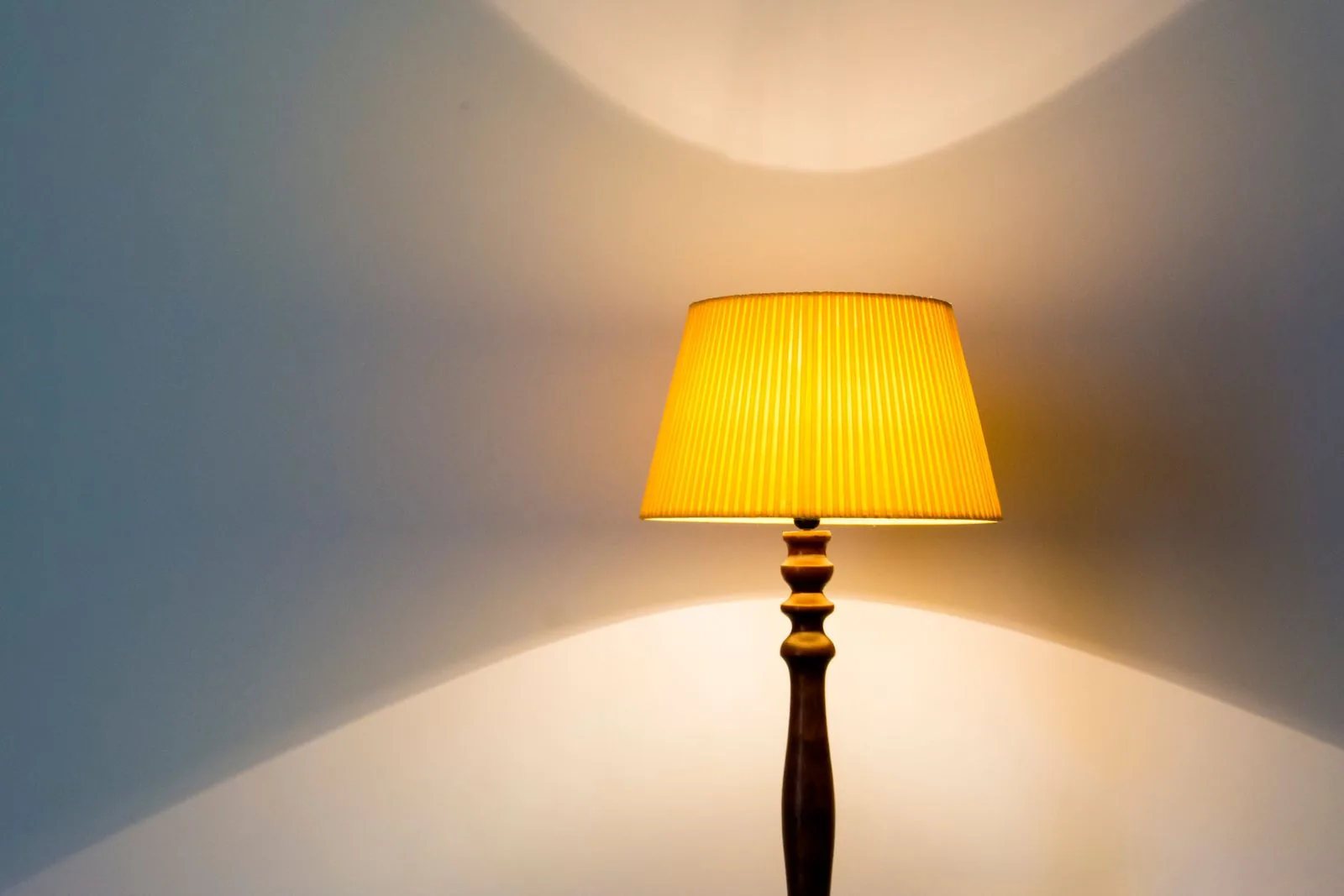
The best paint for most lampshades is a fabric spray, because nearly all table-lamp shades are linen, cotton or a poly blend, and fabric spray dries soft without hiding the weave. Our top pick is Tulip ColorShot Interior Upholstery Spray: Tulip says one can covers one square yard with two light coats, which works out to one average drum shade with paint to spare. For metal shades switch to Krylon Fusion All-In-One, and for a flat chalky look on a stiff shade use Rust-Oleum Chalked spray.
We may earn a commission when you buy through links on this page, at no extra cost to you. As an Amazon Associate we earn from qualifying purchases.
Quick answer: match the paint to the shade
- Linen, cotton or poly fabric shade, going darker: Tulip ColorShot Interior Upholstery Spray.
- Small fabric shade or stencil accents: Tulip ColorShot fabric spray (3 oz can).
- Stiff or rigid shade where a flat, opaque finish matters more than softness: Rust-Oleum Chalked Ultra Matte spray.
- Metal shade (pendant, task lamp, industrial dome): Krylon Fusion All-In-One.
- Hand-painted pattern with brushes: any acrylic craft paint mixed 1:1 with 7 Artists Fabric Medium.
How we chose
We did not paint shades for this guide. We picked products whose manufacturer lists the surface a lampshade is made of (fabric, canvas or metal), then compared the numbers that decide whether a lampshade project works: coverage per can, recoat window, and how long the maker says to wait before the item is handled or used. Specs come from the manufacturers’ technical data sheets and product pages and from the Amazon listings via Amazon’s product API. Ratings are the aggregate Amazon ratings we saw on November 24, 2026. Prices change, so we left them out.
Comparison table
| Paint | Best shade type | Can size | Coverage (maker) | Recoat / wait | Amazon rating (Nov 2026) |
|---|---|---|---|---|---|
| Tulip ColorShot Interior Upholstery Spray | Fabric (natural or synthetic) | 8 fl oz | 1 sq yd (9 sq ft) with 2 light coats | 5 min between coats; dry 72 hours | 4.2/5, 1,500+ ratings |
| Tulip ColorShot fabric spray (3 oz) | Fabric, small shades, stencils | 3 fl oz | Not stated | 5 min between coats; dry 30 min | 4.2/5, 10,763 ratings |
| Rust-Oleum Chalked Ultra Matte spray | Rigid shades, canvas, metal | 12 oz | 12 sq ft per can | Within 1 hour or after 48 hours | 4.6/5, 13,500+ ratings |
| Krylon Fusion All-In-One (matte) | Metal, plastic | 12 oz | Up to 25 sq ft per can | Sources differ (see below) | 4.6/5, 10,000+ ratings |
| 7 Artists Fabric Medium + acrylic paint | Fabric, hand-painted designs | 8.45 fl oz | Depends on paint (1:1 mix) | Dry fully, then fix per label | 4.2/5, 4,279 ratings |
How many cans does one lampshade need?
None of the top results for this search do the math, so here it is. Paint only covers the outside of the shade, and the outside area is easy to work out with a tape measure.
- Drum shade (straight sides): area = 3.14 x diameter x height. A 14-inch drum that is 10 inches tall: 3.14 x 14 x 10 = about 440 square inches, or roughly 3 square feet.
- Tapered (empire) shade: area = 3.14 x (top radius + bottom radius) x slanted side length. A shade 10 inches across the top, 16 inches across the bottom, with an 11-inch slanted side: 3.14 x (5 + 8) x 11 = about 450 square inches, again roughly 3 square feet.
Now compare that with each maker’s coverage figure. One 8-ounce can of Tulip Interior Upholstery Spray (9 square feet with two light coats) handles about three such shades on paper, so a single can is realistic for one shade even if you add a third coat and lose some to overspray. Rust-Oleum’s 12 square feet per can is four shades’ worth at one coat, but Rust-Oleum’s own instructions call for two or more light coats, so plan on two shades per can. Krylon’s “up to 25 square feet” stretches further, which matters only if you’re doing a pair of pendant shades and the lamp bases too.
The five picks
1. Tulip ColorShot Interior Upholstery Spray: best for fabric shades
This is the one to buy for a standard linen or cotton table-lamp shade. Tulip formulates it for home-decor fabric, and the product page says it lets the weave of the fabric show and dries soft to the touch, so the shade still reads as fabric instead of a painted shell.
Who it’s for: anyone taking a cream, beige or faded shade to a darker color such as black, charcoal or coffee brown.
Skip it if: you want to make a dark shade lighter. Tulip states plainly that the spray can turn a light fabric dark but cannot turn a dark fabric lighter.
Pros
- Works on both natural and synthetic fabrics, per Tulip.
- Coverage is published: one square yard per can with two light coats.
- Tulip says the color won’t rub off on clothing once dry.
- Short wait between coats (5 minutes), so two coats fit in one session.
Cons
- Long full dry: Tulip says to let it dry 72 hours, so the lamp is out of use for three days.
- Thick coats leave the fabric stiffer, by Tulip’s own tips. Light coats take patience.
- Small color range compared with general spray paint.
2. Tulip ColorShot fabric spray (3 oz): best for small shades and stencils
The smaller ColorShot can is the clothing version of the same idea. On a lampshade it is most useful for patterns: stripes masked off with tape, a stenciled motif, or an ombre fade from the bottom rim. Tulip’s instructions say colors can be blended on the fabric, and the nozzle front rotates to change the spray pattern.
Who it’s for: mini shades on sconces or chandeliers, and decorative accents on a shade you otherwise keep.
Skip it if: you want to recolor a full-size shade. Tulip does not publish coverage for the 3 oz can, and a full shade at two coats risks running out mid-pass, which shows as a lap line.
Pros
- The largest rating pool in this list: 4.2/5 from 10,763 Amazon ratings.
- Dry to the touch in 30 minutes, per the label directions.
- Wide color range, including metallics such as Gold Shimmer.
Cons
- 3 fl oz is not much paint for an all-over job.
- Like the Interior version, it works best on light fabrics.
- Tulip’s own sources give different wash-wait times (24 hours on the Amazon instructions, 72 hours on a Tulip product page), which tells you the paint keeps curing after it feels dry.
3. Rust-Oleum Chalked Ultra Matte spray: best for a flat, opaque look
Chalk-finish spray hides the old color better than fabric spray does. Rust-Oleum lists wood, metal, ceramic, glass and canvas on its technical data sheet, and says the spray gives one-coat coverage on most surfaces without priming. On a lampshade that means you can go from dark to light, which fabric spray can’t do.
Who it’s for: rigid shades (styrene-backed drums, canvas, metal), and anyone who wants a matte, slightly velvety finish that matches chalk-painted furniture in the same room. If you already use chalk paint on furniture, our chalk paint comparison covers the brush-on versions.
Skip it if: the shade flexes or is a soft pleated fabric. Bob Vila’s fabric spray guide notes that chalky-finish spray makes fabric stiff, and a stiff layer on a shade that flexes is where cracking starts. Paper and parchment are not on Rust-Oleum’s surface list, so test on the inside seam first.
Pros
- Highest rating here: 4.6/5 from 13,500+ Amazon ratings.
- Dry to the touch in 20 minutes, dry to handle in 1 hour (Rust-Oleum TDS).
- Sprays at any angle, even upside down, which helps reach the inside rim.
Cons
- Strict recoat window: within 1 hour or after 48 hours. Spraying a second coat on day two risks wrinkling.
- Amazon’s review summary reports mixed coverage: some buyers needed two coats, others say the can stopped spraying.
- Oil-based with solvent cleanup (mineral spirits or xylene), so spray outdoors.
4. Krylon Fusion All-In-One: best for metal shades
Metal dome pendants, desk-lamp shades and industrial cages need a paint that bonds to bare or previously painted metal without primer. Krylon says Fusion All-In-One does that on metal, wood, plastic, glass and more, and the matte black version is the classic finish for an industrial pendant.
Who it’s for: metal or plastic shades and lamp bases, indoors or out.
Skip it if: the shade is fabric. Tulip’s guidance on regular spray paint applies here: hard-surface paints dry stiff and can crack and flake off fabric.
Pros
- Coverage up to 25 square feet per 12 oz can, the most in this list.
- No sanding or priming required, per Krylon.
- 4.6/5 from 10,000+ Amazon ratings for the matte black can.
Cons
- Krylon’s own documents disagree on the recoat window: the Canadian product page says within 2 hours or after 48 hours, the Lowe’s data sheet says before 6 hours or after 24 hours. Follow the label on your can, and when in doubt finish all coats within 2 hours.
- Dry-to-handle time is listed as 1 hour on krylon.com and 2 hours on the data sheet.
- Krylon recommends 55-75°F and humidity below 60%, which rules out a lot of winter garages.
5. 7 Artists Fabric Medium + acrylic paint: best for hand-painted designs
Brushing plain acrylic craft paint onto a fabric shade is the most common DIY approach, and the most common complaint is a stiff, crackly result. A textile medium mixed 1:1 with acrylic paint addresses that: 7 Artists says its medium helps the paint move with the fabric and reduces stiffness, cracking and flaking.
Who it’s for: painted florals, hand-drawn stripes, color-matched details using acrylics you already own. Our guide to paint for stenciling covers technique for crisp edges.
Skip it if: you want an even all-over color. Brushing a whole curved shade evenly is much harder than spraying it.
Pros
- Turns any acrylic color into a fabric-friendly paint, so the palette is unlimited.
- Simple 1:1 mixing ratio.
- 4.2/5 from 4,279 Amazon ratings.
Cons
- Fabric mediums are usually heat-set with an iron, which is awkward or impossible on a shade glued to a frame. Follow the label’s fixing instructions where you can; for a shade that never gets washed, full air-drying is the practical option.
- Brush marks show on smooth linen.
How to choose: four questions
1. What is the shade made of? Pinch it. If it flexes and you can see a weave, it’s fabric: use a fabric spray or acrylic plus medium. If it’s rigid but has a fabric face, Chalked spray works and gives better hiding. If it’s metal, use Fusion. If it’s paper or parchment, none of these makers list paper, so test on the inside first.
2. Lighter or darker? Fabric sprays only go darker. To make a black shade white, you need an opaque chalk-type paint, and you accept a stiffer surface.
3. Does light need to come through? Every coat cuts light transmission. A translucent linen shade sprayed black becomes a downlight that glows only at the top and bottom openings. That can look good over a reading chair, but it changes the room. If you want the shade to keep glowing, choose a mid-tone and stop at two light coats.
4. Is the lamp in a high-touch spot? Shades get grabbed when people switch lamps on. Fabric sprays that won’t rub off on clothing (Tulip’s claim for the Interior spray) are safer near a sofa than a chalk finish without a topcoat. Rust-Oleum recommends its Chalked Clear Protective Topcoat over Chalked colors for added protection.
Before you switch the lamp back on
Wait for the full dry or cure time on the label, not the dry-to-touch time. For Tulip Interior Upholstery Spray that is 72 hours; Rust-Oleum says Chalked spray is fully dry in 24 hours. Solvent-based sprays like Chalked and Fusion keep releasing solvent while they cure, so give the shade that time in a ventilated room or garage.
Bulb heat matters too. The U.S. Department of Energy notes that incandescent bulbs release about 90% of their energy as heat, while LEDs emit very little. If your lamp still takes an incandescent bulb, a freshly painted shade is a good reason to switch to an LED, and in any case stay within the lamp’s maximum wattage label.
Spraying a lampshade: setup that avoids the usual mistakes
- Remove the shade from the lamp and dust it. Tulip says to start with clean, lint-free fabric.
- Mask the inside lining, trim and any metal fitter with painter’s tape and paper.
- Hang the shade or set it over a bucket so you can turn it without touching wet paint.
- Shake the can for at least a minute (Tulip and Rust-Oleum both specify this). Hold Tulip 6-8 inches away and Rust-Oleum 10-12 inches away.
- Spray light coats while turning the shade. Tulip suggests alternating directions between coats, side to side and then top to bottom.
- Watch the recoat window for oil-based sprays: Chalked within 1 hour or after 48 hours.
If you are refreshing upholstered furniture in the same room, our guide to the best paint for upholstery matches fabric paints to fabric type, and the furniture cleaning codes guide explains how to clean painted fabric later.
FAQ
Can you use regular spray paint on a lampshade?
On a metal shade, yes. On a fabric shade, it’s a poor choice: Tulip explains that regular spray paints are made for hard surfaces and dry stiff, so they can crack and flake on fabric. Use a fabric spray instead.
Can you paint a lampshade with acrylic paint?
Yes, but mix it 1:1 with a fabric or textile medium so the dried paint stays flexible. Plain acrylic on fabric tends to stiffen and crack.
Can you paint a dark lampshade a lighter color?
Not with fabric spray; Tulip says its spray cannot turn dark fabric lighter. An opaque chalk-finish spray like Rust-Oleum Chalked can cover a dark shade, at the cost of a stiffer surface.
How much paint do I need for one lampshade?
Measure the outside: 3.14 x diameter x height for a drum shade. A 14 x 10 inch drum is about 3 square feet, so one 8 oz can of Tulip Interior Upholstery Spray (9 square feet with two coats) is enough.
Is it safe to paint a lampshade?
Let the paint fully dry before using the lamp (72 hours for Tulip Interior), spray outdoors or in a ventilated space, and keep within the lamp’s wattage limit. LED bulbs run much cooler than incandescent ones, per the Department of Energy.
Sources
Checked November 24, 2026.
- Tulip ColorShot Interior Upholstery Spray product page (directions, 72-hour dry, coverage, light-to-dark rule): tulipcolor.com/products/colorshot-interior-black
- Tulip ColorShot fabric spray product page (directions, 30-minute dry, 72-hour wash wait): tulipcolor.com/colorshot-gray
- Tulip on fabric spray vs regular spray paint: tulipcolor.com/fabric-spray-paint-2
- Rust-Oleum Chalked Ultra Matte Sprays technical data CHD-07 (coverage, dry and recoat times, surfaces): rustoleumsupport.zendesk.com
- Krylon Fusion All-In-One product page (coverage, dry times, surfaces): krylon.com
- Krylon Canada Fusion All-In-One (recoat within 2 hours or after 48 hours): krylon.ca
- Krylon Fusion All-In-One data sheet via Lowe’s (recoat before 6 hours or after 24 hours): pdf.lowes.com
- Bob Vila, The Best Fabric Spray Paint (chalky spray stiffens fabric): bobvila.com
- U.S. Department of Energy, LED Lighting (heat output): energy.gov/energysaver/led-lighting
- Amazon listings (features via Amazon Creators API; ratings from listing pages), Nov 24, 2026: ASIN B071K8DCS9, B00UY194NE, B01J45643S, B07LFWTQJX, B09M78Q43G